Reinvent: redesigning the use and design of prosthetics
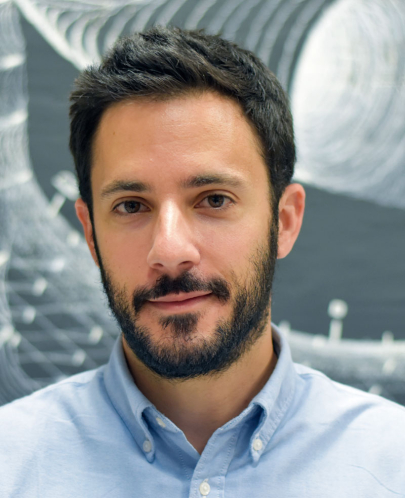
Nathanaël Jarrassé, CNRS research director at ISIR, presents Integrated Project 1 (PI1) “REINVENTing prosthetics” from the Organic Robotics (O2R) research programme. Together with a multidisciplinary team and user experts, he is designing a practical and customisable prosthesis.
Of the issues identified by PI1 (mechanics, control, perception, learning, as well as physical, individual and social integration), which is currently the most accessible, and which presents your greatest challenge? And why?
Nathanaël Jarrassé: Of the challenges identified in REINVENT, the mechatronics aspect seems to us to be the most achievable at present. Recent advances in the design of bio-inspired structures, lightweight actuators and variable transmissions already provide a solid technological foundation. Our partners (CEA-List, LS2N) have the necessary expertise and existing prototypes, which allows us to tackle this aspect with clearly identified but manageable challenges. We know how to design high-performance architectures that are lighter and better balanced: the challenge now lies more in their integration and customisation.
However, the greatest challenge lies in recreating a new sensorimotor connection and ensuring the physical, psychological and social integration of prostheses. Recreating a genuine sensorimotor coupling, enabling the user to perceive their prosthesis as part of their body and to interact with the environment through it, remains a goal that is still very much a work in progress. Current approaches to sensory feedback, whether haptic or neurostimulation-based, struggle to reproduce the richness and naturalness of human sensation; and control approaches generate a significant cognitive load whilst failing to enable natural movements. Added to this is the complexity of individual and social adaptation: beyond technical performance, the aim is to re-establish a lived continuity between body, tool and identity. It is precisely this interplay between technology and human experience that, for us, constitutes the true challenge of REINVENT.
To support you in this project, you’re recruiting user experts – is it easy to find volunteers? What kind of personalisation do they prioritise? Do they have any expectations that your team might not have considered, and if so, what are they, for example?
N.J.: We really do try to involve user experts throughout the project. But it’s not always easy: people with upper limb amputations make up a small population, scattered across France, and each person has to juggle their own personal and professional commitments. Taking part in a research programme also requires a clear understanding that the aim is to advance knowledge and test ideas or prototypes — not necessarily to immediately develop a finished product from which they can benefit directly. This therefore requires a real effort to explain and raise awareness. Fortunately, we can rely on a network of partner associations, rehabilitation centres and orthopaedic technicians. Thanks to them, and to the motivation of many amputees to help advance prosthetics, we are gradually building a group of highly committed user-experts. But this remains a real logistical challenge: we need to coordinate travel, manage schedules and support each individual to ensure that participation remains smooth and sustainable.
What stands out most from their feedback is the importance of personalisation — going far beyond the standard adjustments offered by prosthetic adjustment interfaces or what can be adjusted by prosthetists. They talk a lot about comfort and intuitiveness, but above all about regaining the ability to do the activities that are close to their hearts. Rather than a ‘one-size-fits-all’ prosthesis, they often express a need for specific tools, tailored to each use or each passion — whether it’s rowing, climbing or cycling, for example – which reinforces our belief that we need to rethink the way we design prostheses, favouring customisable modular solutions rather than a single model intended to suit everyone.
As an interdisciplinary project, robotics engineers collaborate with researchers in sociology, anthropology, neuroscience and philosophy, as well as with doctors specialising in rehabilitation. How do discussions take place regarding the uses, place and role of prosthetics and other assistive technologies, such as exoskeletons?
N.J.: Interdisciplinary dialogue lies at the heart of the REINVENT project and tends to take place in a fairly fluid and constructive manner, even if it requires a genuine effort at mutual acculturation. These regular exchanges, during working days or collaborative field trials, centred on concrete cases and shared observations, allow different perspectives to be compared: the engineer will discuss performance and metrics, the clinician rehabilitation and monitoring, and the user comfort and personal experience. Discussions on the uses, place and role of prostheses or exoskeletons are not limited to technical aspects: they also address the physical, social, symbolic and even political dimensions of these devices.
These exchanges enable everyone to understand the constraints and expectations of others, and to shift their perspective, which generally encourages the emergence of new ideas or concepts.
Other Interviews