The future of robotics in the agricultural and food industry
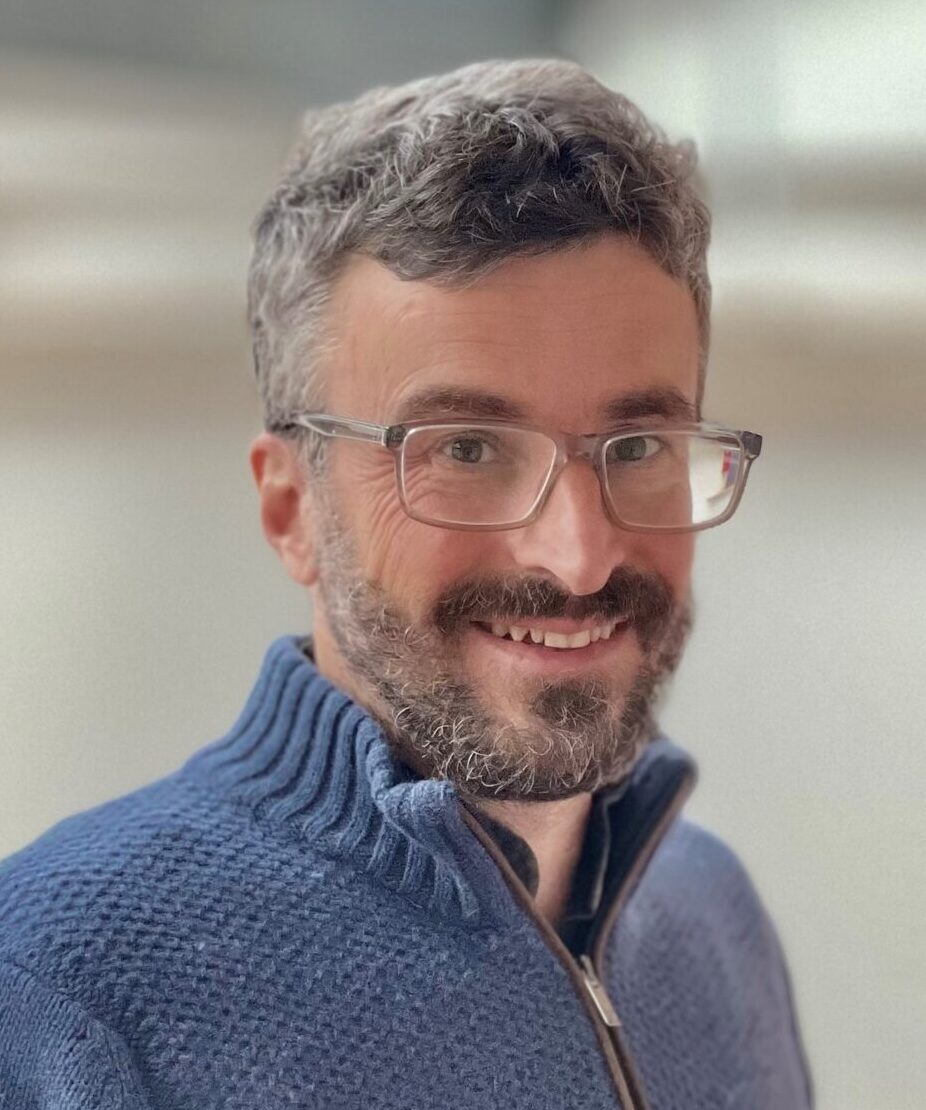
Andrea Cherubini, professor at École Centrale de Nantes and member of Laboratoire des sciences du numérique à Nantes (LS2N – CNRS/École Centrale de Nantes/Nantes University), presents the integrated project “Interactive Mobile Manipulation” (PI2 IMM) under the Organic Robotics research programme (PEPR O2R). It develops the accessibility, autonomy and integration capabilities of robots within the human environment, particularly in the agri-food sector.
Could you tell us about your career path and how you came to be interested in collaborating with non-specialists in robotics – such as those in ergonomics, communication sciences, co-design (collaborative design), anthropology, sociology and social psychology?
Andrea Cherubini: Native of Italy, I obtained a Master’s degree in Mechanical Engineering in Rome (“La Sapienza”, 2001), followed by a second Master’s degree in Control Systems in Sheffield (2003). Following a PhD at “La Sapienza” (2008) and a post-doc at Inria Rennes, I joined the University of Montpellier as a senior lecturer (2011), then as a professor (2021). Since 2024, I have been a professor at École Centrale Nantes (LS2N).
My work aims to make robots more autonomous and adaptable, particularly for industry and the construction sector. With the rise of AI and robotics in our daily lives (autonomous vehicles, domestic robots, etc.), I wanted to engage with the general public through outreach activities (debates, round tables, videos). These exchanges with non-specialists inform our thinking: what role should these machines play in the future? How can we design them so that they best serve humanity?
You are working on developing a new, versatile interactive mobile manipulator. What type of robot are we talking about, and what is it intended for? What indoor and outdoor navigation challenges will it face?
A.C.: The robot we are developing as part of the PI2 IMM project will have anthropomorphic features (two arms, mobility, vision). However, it will possess enhanced capabilities compared to those of humans, notably the ability to perceive objects without touching or seeing them, and better balance – bipedalism being a major obstacle to the development of humanoid robots. Thanks to its design, it will be easily programmable and usable by novices, whom it will be able to assist with tasks inspired by the agri-food sector: for example, picking and sorting market garden produce, preparing and transporting crates, etc. Among the technological and scientific challenges to be overcome are: the grasping and dexterous handling of soft and deformable objects; rapid mobility of both the base and the upper body (torso, arms); and the management of indoor/outdoor transitions, for both vision and navigation.
You mention starting the research using existing platforms that have proven their effectiveness and robustness in quasi-ecological conditions. Could you specify what kind of platforms these are? What do you mean by “quasi-ecological conditions”?
A.C.: As part of two European projects I coordinated at the University of Montpellier (H2020 Versatile and H2020 SOPHIA), we designed BAZAR, a mobile robotic manipulator equipped with two arms and mounted on wheels. During the SOPHIA project, we replicated a deburring task for the automotive industry under near-real-world conditions, which the robot carried out in collaboration with a human operator.
This experiment, conducted in an environment that faithfully replicated the industrial process (same products, same constraints), enabled our partners in the humanities and social sciences – Italian, Belgian and German physical and cognitive ergonomists involved in SOPHIA – to conduct a detailed analysis of human-robot interaction, both in terms of quality and impact.
You want to ensure that robots are integrated into society. How do you intend to go about this?
A.C.: Despite the promising results achieved as part of the SOPHIA project, I am convinced that the successful integration of robots into society can only be achieved through a holistic and interdisciplinary approach, right from the earliest stages of design. It is essential to co-create the technological artefact in close collaboration with the humanities and social sciences – philosophers, ergonomists, anthropologists, sociologists, etc. – rather than designing the robot, its algorithms and its functionalities whilst ignoring the end user. Such an approach, if continued, inevitably exposes us to failures in acceptance and usage.
In this regard, prospective design offers a particularly relevant approach: it invites us to consider five inseparable dimensions in the design of an artefact – function, use, interaction, imagination and form. Our objective, within the PI2 IMM project, is to avoid creating machines to which humans must adapt, but rather to develop technologies that integrate naturally into their environment and meet their needs. To achieve this, we prioritise resolutely interdisciplinary research, where robotics experts and non-specialists collaborate from the design phase onwards, in order to anticipate the technical, social and ethical challenges of tomorrow.
More news Interviews