Acculturation – Methodology
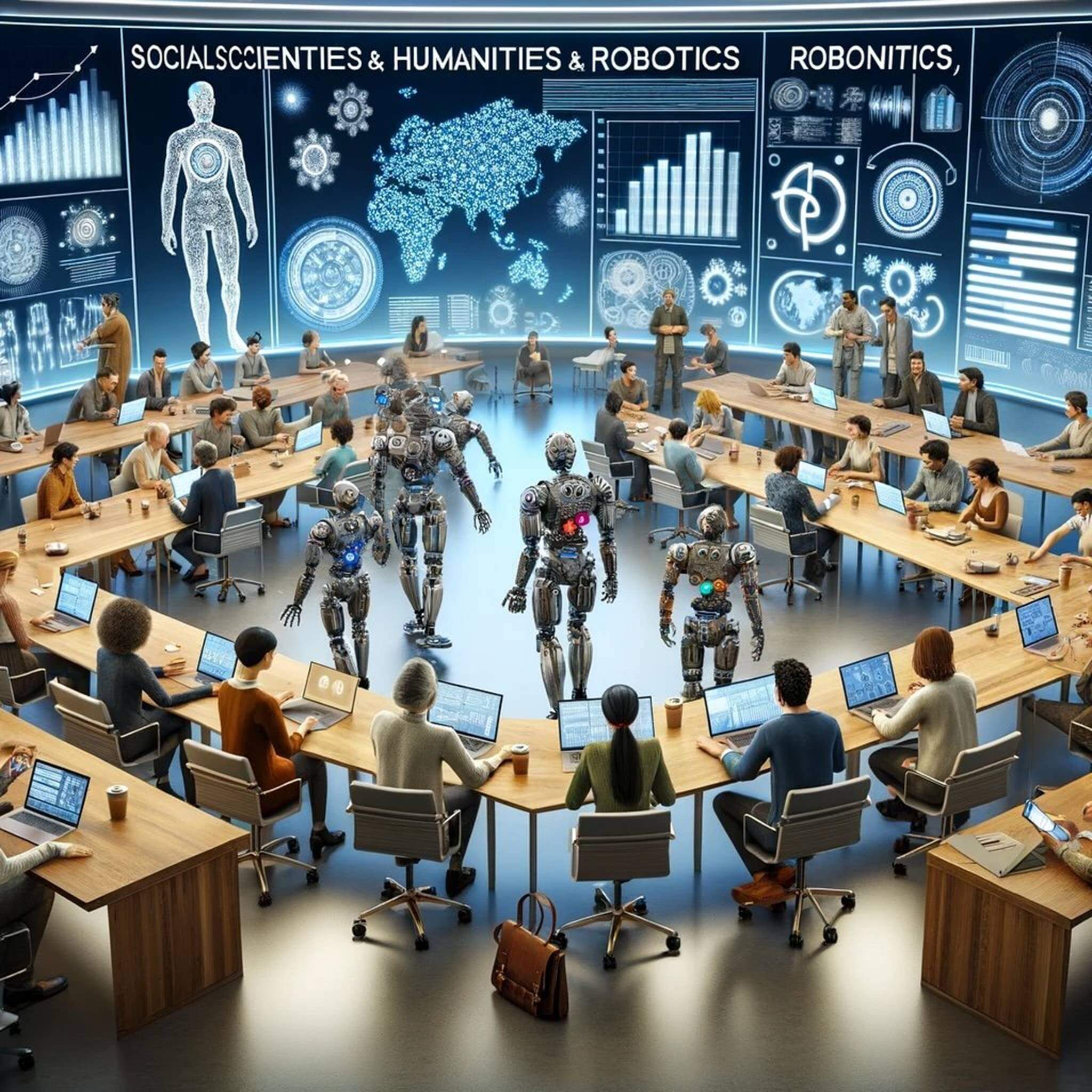
Credits: ChatGPT
Coordinator: Caroline Moricot, Professor of Sociology at Paris 1 Panthéon-Sorbonne University and director of CETCOPRA, assisted with Guillaume Morel, professor of robotics at Sorbonne University, member of the Institute of Intelligent Systems and Robotics (ISIR – CNRS/Sorbonne University).
The researches conducted by the O2R programme focuses primarily on the design of robotic objects, their uses, and the factors influencing their social adoption. The interdisciplinary projects included in the programme offer numerous opportunities to explore the boundaries of disciplines and to experiment with the objects themselves.
The acculturation-methodology subject matter is integrated across these activities and is addressed not to the robots themselves, but to researchers.
The aim is, firstly, to establish cross-disciplinary training for scientific communities (humanities and social sciences <-> engineering and digital sciences) in the fundamental concepts that are essential to master for multidisciplinary research. A significant pedagogical effort is needed to develop a common language and a presentation of concepts that allows for their appropriation by the research communities. Therefore, training should not be limited to courses and lectures, but should include practical experiences (observational exercises in ethnography, programming and use of robots, fieldwork). A working group will be formed to produce educational content for the program’s participants. Training sessions for doctoral students, in the form of a summer school, will be offered. The material produced will then be widely disseminated through the creation of appropriate resources (course materials, books, videos, etc.).
Furthermore, the aim is to build upon the work carried out within the 7 projects to engage in reflective research on methodological issues. We will invite the scientists involved in the projects to enrich themselves with existing and established approaches to multidisciplinary research practice. In turn, we will mobilize the entire PEPR as a vast field for methodological experimentation. We will observe and document the acculturation processes within the projects—those resulting from contact between communities and inducing changes within them—as well as the failures and pitfalls, which will implicitly guide practices at the interfaces.
The goal here is to create, through the interconnection of these two components, a research community informed of the challenges of the social adaptation of robots, in order to meet the demand for a transformative program. The acculturation-methodology initiative will therefore aim to favorably position future actors in French research and innovation on robotics and its uses, enabling them to have a holistic vision of technological innovation, intertwining scientific and technological issues, societal and social issues, and issues centered on individuals.
Objectives
Description
To raise awareness about technology as a challenge #
The aim is to raise awareness among engineering and design communities, as well as the general public, about the societal challenges and anthropological shifts brought about by technological innovations and to take a holistic view over flexible co-adaptation processes. This involves encouraging critical and civic reflection and the reappropriation of technological issues and questions through debates, meetings, and debates organized by researchers in the HSS. Questions such as: “Can we envision ecological robotics?”, “How can we involve citizen groups in the design process?”, “Are so-called ‘flexible’ or ‘liquid’ technologies more viable, acceptable, etc.?”.
To suggest virtuous design methods #
Stimulating reflection on the means at our disposal to “no longer do things as before” (organic design), integrating the impacts of environmental pressure and designing more suitable technologies, using other materials, and considering virtuous uses.
To imagine #
Within the PEPR and beyond, we aim to create a space for vision and storytelling around future technologies, their forms, potential uses, and social adaptations. We seek to stimulate technological imaginaries better suited to the challenges of our time than those of the 20th century we have inherited. This reflection will take the form of a red team-type initiative and the organisation of a regular workshop on imaginaries of the future with science fiction writers and specialists in speculative storytelling.
To involve #
Promoting innovative participatory approaches that enable education, co-design, and participation, particularly regarding soft and organic robotics. Implementing sharing mechanisms (such as hackathons, demos, etc.). Including groups that don’t always have their say in technological innovation processes. Throughout the program, inviting project leaders to share their innovations and proposals in broader debates and consultations, or with audiences they don’t typically engage with.
To boost creativity #
Artist Residencies – Fostering exchanges and connections between research, design, art, and society through a range of initiatives (residencies, performance workshops, demonstrations, installations, exhibitions, training, etc.). Providing a meeting place for arts, sciences, and design to overcome creative barriers, relying on a network of art schools and artistic institutions (design schools, the Cité des Sciences, museums, and technological arts). This involves promoting artist residencies in laboratories, as well as developing temporary installations, exhibitions, performances, and opportunities to meet and discuss the work of artists and designers.