Modelling social robotics

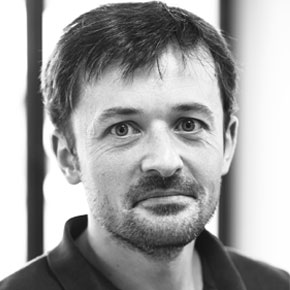
Jeremie Dequidt, a professor at the University of Lille and a member of the Centre de recherche en informatique, signal et automatique de Lille (CRIStAL – CNRS/Centrale Lille/Université de Lille), presents the AS4 “Modélisation, simulation, multi-échelle et biomécanique“ within the Organic Robotics (O2R) research programme. He is developing, in a cross-disciplinary manner, new models and methods for socially adapted robots capable of conforming to their environment.
The main aim of your project is to support other projects by providing new models and methods for the design, manufacture and control of socially adapted robots. Has it already resulted in a model and/or tool that is being used in other projects, and if so, could you provide further details?
Jeremie Dequidt: AS4 maintains close collaborations with several PEPR O2R projects, in particular AS1 and AS2. Among the key objectives of the support action is the development of fully differentiable models — of both robots and interactions — so that they can be efficiently calibrated using real-world data or integrated directly into machine learning pipelines. This represents a major scientific challenge for deformable robotics. Significant results have already been achieved in the differentiable modelling of contacts, notably within the Willow team at Inria Paris, through the work of Justin Carpentier and Étienne Ménager — results which directly benefit AS2. As for the other bottlenecks identified, the work currently underway remains at a preliminary stage and does not yet provide substantial input to the partner projects.
To enable robots to change shape or adapt to their environment, you are looking for materials, sensors and actuators that are new and have been relatively little studied in robotics research. What options are currently available to you? And which element in nature (animal or plant) inspires you most when it comes to the requirements of socially adapted robotics?
J.D.: At present, several avenues are being explored in parallel to equip soft robots with the sensory and motor capabilities required for safe and adaptive physical interaction with humans. In terms of actuators, pneumatic actuators with deformable chambers represent a relatively mature technology, offering conformable and intrinsically safe movements, although they impose space constraints due to the need for a compressed air supply. Alternatives based on cable-tendon actuation or shape-memory alloys are also being considered for more compact configurations. On a radically different scale, micro-robots whose degrees of freedom are based on the manipulation of water droplets are also being studied at the FEMTO-ST laboratory (Guillaume Laurent and Antoine Barbot).
In the field of sensor technology, research at the CRIStAL laboratory focuses in particular on the development of deformable resistive sensors, which operate on the principle of changes in electrical resistance induced by the mechanical deformation of a conductive composite material — typically an elastomer filled with carbon nanoparticles or incorporating conductors arranged in a serpentine pattern. These sensors offer the advantage of being manufactured using printing or moulding processes compatible with the complex geometries characteristic of flexible structures, and of providing a continuous response over wide ranges of deformation, where conventional rigid sensors reach their mechanical limits. Their integration into robotic structures paves the way for distributed proprioception — a prerequisite for closed-loop control of systems whose internal configuration cannot be inferred from the kinematics of rigid bodies alone.
In terms of biological inspiration, swimming microorganisms — flagellated bacteria, spermatozoa or ciliates — provide a particularly rich source of inspiration for the design of micro-robots intended to operate in fluid environments. Over the course of evolution, these organisms have developed remarkably efficient locomotion strategies at low Reynolds numbers – a regime in which viscous forces largely dominate inertial forces and where conventional propulsion principles become ineffective. Significant results have already been achieved in this area at LS2N, based on the work of Frédéric Boyer, Johann Hérault and Clément Moreau.
You mention the role of artificial intelligence methods, as well as user interaction with flexible and deformable robots. What do non-specialists in robotics – such as those in sociology, cognitive psychology, design and philosophy – think of these methods, and what ideas and/or practical realities do they wish to bring to the attention of engineers?
Olivia Chevalier, a postdoctoral researcher in philosophy at AS4, replies:
This is a question that cannot be answered in a generalised way, not only because of the diversity of the disciplines involved, but also because of the lack of consensus within a single discipline.
For the cognitive sciences, the prospect of a humanoid robot that is more ‘natural’ both physically – thanks to soft robotics (gestures, locomotion, etc.) – and inter-subjectively – through linguistic exchanges, behaviour, etc., enabled by AI – holds the promise of significant advances for this discipline. Thanks to these robots, we could learn a great deal about humans: about what they are not, by comparing them to robots, and about what they are, by observing them as they interact with robots.
On the one hand, sociology is concerned with the mirror-like function of robots, that is to say, the image they reflect back to us of ourselves. This sociological approach thus complements that of the cognitive sciences on this point. On the other hand, some sociologists are interested in the anthropomorphic dimension of our relationship with robots: by projecting human characteristics onto robots, we tend to humanise them. This trend may be viewed positively by some as a challenge to the naturalism that draws a clear distinction between humans and non-humans, and as a kind of liberating shift towards a (neo)animistic relationship with the world. For others, however, this tendency is more akin to a fantasy, a blurring of boundaries that stems from intellectual confusion.
One of the aims of design in robotics is to facilitate the human–machine relationship and interaction (HMI). Various criteria may or may not conflict with one another and require trade-offs: functional design, aesthetics, etc. Here too, the designer’s thinking takes into account the uncanny valley effect in order to find the ‘right’ interface capable of facilitating the human–machine relationship.
Philosophy – a discipline that is supposed to take all fields of knowledge into account – attempts to bring together all the aspects and issues outlined above. To these questions, it adds ethical considerations: can we allow robots to make decisions? But does a robot’s responsibility make any sense? Will it be necessary to set a limit on the integration of robots into our society (businesses, schools, etc.) and into our bodies (prosthetics, micro-robots delivering medication, etc.)? Is humanity’s future as cyborgs merely a fantasy, or will it be inevitable? Finally, one of the challenges of integrating robots into natural and open environments is ecological: what are we to make of the energy-intensive nature of the infrastructure required for this integration?
The imaginaries against which these reflections are woven are varied. They range from the robot as a mere tool to the robot dethroning humanity in terms of strength, robustness and intelligence, via a hybrid future for humanity. Assisting humans, or ‘complementing’ them where they fall short of robots, seem to be widely accepted and reasonable prospects, yet they are constantly torn by our ambivalent relationship with robots, caught between fascination and fear.
More news Interviews